Written by Nathan.
Best For: Disabled travellers, carers, families planning accessible trips
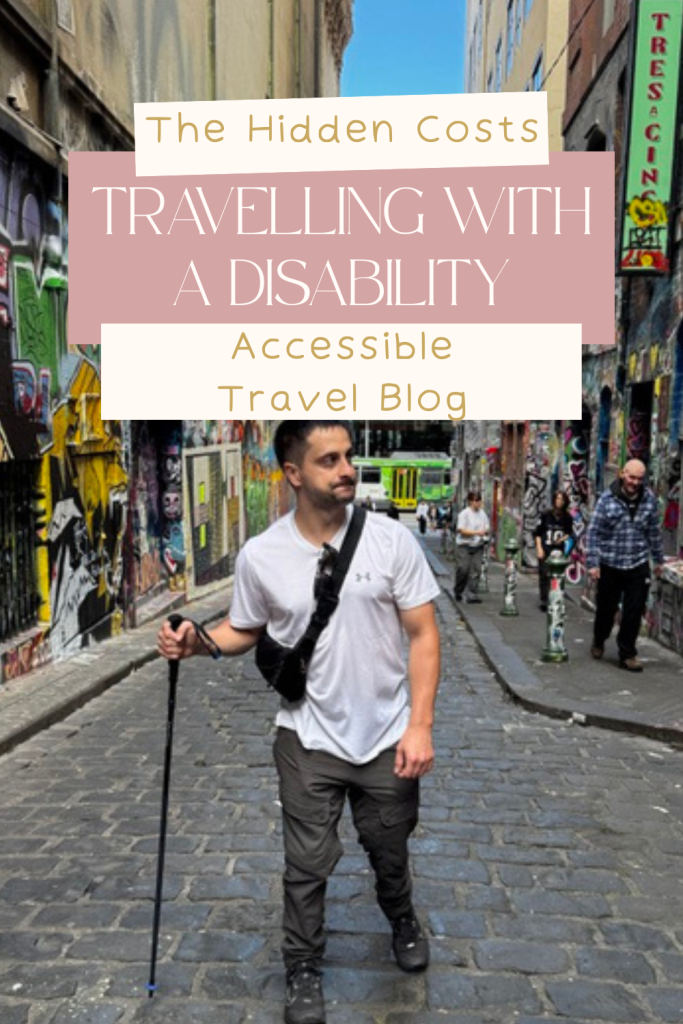
Our Experience: 11 weeks post-hip replacement, travelling through Singapore, Bali, and Australia
Reality Check: Budget 20–30% more than standard travel guides suggest
*This post contains affiliate links. If you book through our links, we may earn a small commission at no extra cost to you. This helps support our travels and keeps our content free. We only recommend services we genuinely use and love!*
Every travel budget guide tells you to account for flights, accommodation, food, and activities. What they don’t mention? The disability tax that quietly adds hundreds, sometimes thousands, to every trip.
After travelling from Singapore through Bali to Australia, 11 weeks post-hip surgery and using mobility aids, I learned pretty quickly that ‘budget travel’ doesn’t really exist when you have access needs. This isn’t a complaint; it’s just reality. And if you’re planning accessible travel from the UK, here’s what you actually need to budget for, the things standard guides won’t tell you.
The UK Benefits Issue: More Than 3 Months and You’re On Your Own
Here’s the big one: if you’re on benefits and travelling for more than 13 weeks, they stop. PIP, DLA — all of it. This is worth knowing before you book that extended trip.
Benefits that are suspended include:
- Personal Independence Payment (PIP)
- Disability Living Allowance (DLA)
- Any other disability-related benefits
For anyone planning long-term travel, this is a massive financial hit. You’re not just budgeting for the trip itself — you’re budgeting to cover the loss of income that helps manage disability costs at home.
Our situation: Four months away meant no benefits for the entire trip. We had to have enough savings not just for travel, but to cover the gap when we returned before payments restarted.
What you need to know:
- Notify the DWP before you leave if your trip exceeds 13 weeks
- Benefits usually restart when you return, but there may be delays
- Budget accordingly, or consider shorter trips with breaks back in the UK
Your Blue Badge Works Differently (Or Not At All) Outside the UK
The Blue Badge is brilliant at home — accessible parking, exemption from certain charges, companion access to venues. Abroad, it’s a lottery.
What we encountered:
Singapore: We didn’t try using it for parking (we relied on taxis), but it did work as proof of disability when applying for the Universal Studios access card — so that was something. (Book your accessible activities here using BETHMAYBZLIVESLIFE5 to save)
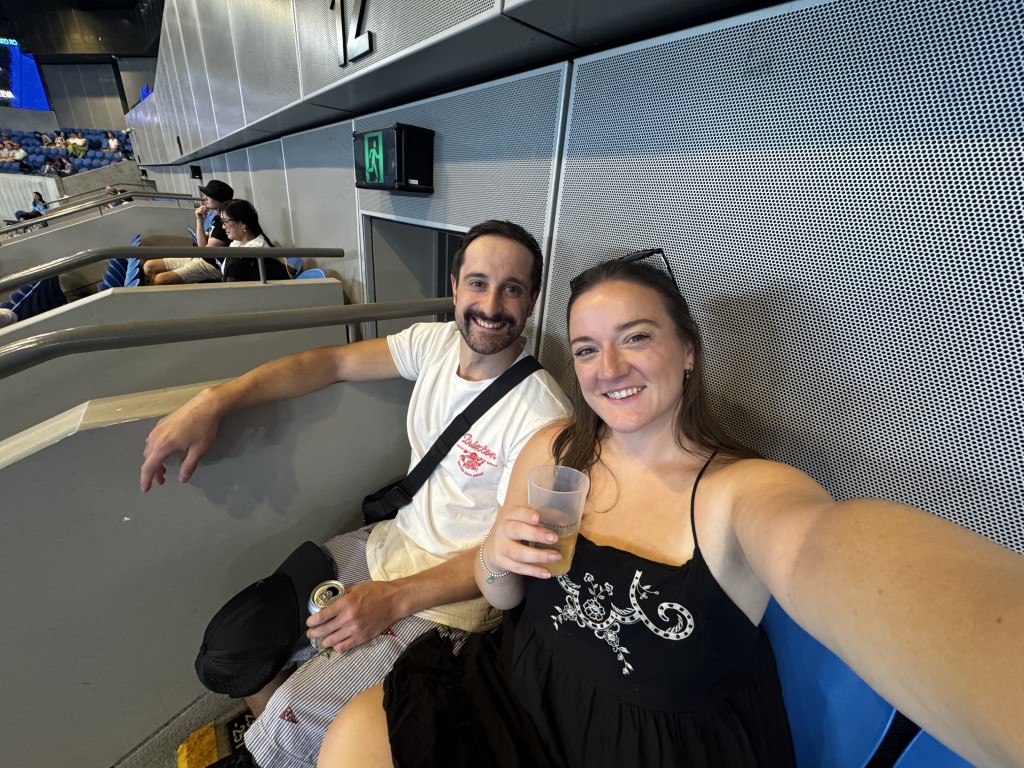
Australia: Parking with the Blue Badge worked fine. The problem was companion access at venues and attractions. Most places wanted a Victorian resident disability pass for free or discounted companion tickets. The Blue Badge worked at the cricket but was rejected at the Australian Open and the Blue Lotus Water Garden. About 90% of venues needed the Victorian permit for carer tickets, which we couldn’t obtain as non-residents.
The hidden cost: When venues don’t accept the Blue Badge for companion access, you’re paying full price for two tickets instead of one plus a free or reduced carer entry. At major attractions or sporting events, that’s an extra £20–100 per visit. Over a long trip, those charges stack up.
The bigger issue: You never know what’ll be accepted until you ask. What works at one venue won’t work at the next, even in the same city.
Advice: Ring ahead to every venue you plan to visit. Ask specifically whether they accept UK Blue Badges for companion access, or whether they require a state-specific permit. Don’t assume anything, and don’t show up expecting your badge to work the same way it does at home.
UK Concessions That Don’t Exist Abroad
At home, you’re probably used to certain discounts that reduce day-to-day costs. Travel abroad and all of those disappear — meaning you’re suddenly paying full price for things you haven’t paid full price for in years.
What you lose abroad:
- Disabled Person’s Railcard: One-third off train travel in the UK doesn’t apply abroad
- Free bus passes: England, Scotland, and Wales offer free or concessionary bus travel. Abroad, you pay full fare.
- Blue Badge parking concessions: Free or discounted parking you’re used to at home doesn’t apply abroad
These aren’t massive individual expenses, but they add up. A cinema trip that costs £12 at home (one ticket with a CEA card) costs £24 abroad (two full-price tickets). Train journeys, bus fares, parking — all at full price when you’re used to significant discounts. It’s easy to forget these costs when budgeting because you don’t think about them at home any more.
Taxis vs Walking: The Mobility Tax
This cost adds up fast. Most budget guides assume you’ll walk everywhere or take cheap public transport. When you’re using mobility aids, managing post-surgery pain, or have general mobility issues, that ‘short 10-minute walk’ from the station becomes a £15 taxi ride.
Singapore: Typical backpackers walk 10–15 minutes with a rucksack from the station to their accommodation. We used Uber or Grab from the airport and took regular taxis because walking with luggage and mobility aids simply wasn’t realistic. Even with Singapore’s excellent MRT, we used taxis far more than we’d budgeted for.
South East Asia — where the costs really stack up:
Much of South East Asia’s infrastructure is essentially non-existent for pedestrians:
- No pavements in most areas
- Chaotic roads packed with scooters
- Walking anywhere can be genuinely dangerous, even for able-bodied travellers
Budget travellers rent scooters for £3–5 a day and zip around. Considering my mobility issues, that wasn’t an option for us — so taxis for everything. Individual rides weren’t extortionate (typically £3–8), but the frequency added up. Where budget travellers spent £5 a day on scooters, this cost us £15–25 a day, because we needed multiple trips for things they could do in one journey.
Over our four or five days in Jimbaran, Bali, that’s an extra £45–100 compared to backpackers — just on transport. Small premiums across every destination add up fast over a longer trip.
Budget reality:
- Singapore and other cities with good infrastructure: add £10–20 per day for taxis and public transport
- Bali and destinations with poor infrastructure: add £15–25 per day minimum (more if doing lots of activities)
Dorm Rooms Are Off the Table (And That Kills Your Budget)
Budget travel guides love hostels, £5 a night in a dorm room, kitchen access, a social atmosphere. Sounds great until you can’t physically get into a top bunk. Or any bunk.
The hidden cost: You’re forced into private rooms or hotels, which can be three to five times more expensive than a hostel bed.
Our experience in Singapore: V Hotel Lavender cost less than £80 per night and was one of the more affordable accessible options. Most hostels in the same area were £15–20 per person per night for a dorm bed. I couldn’t access those, so we paid roughly four times more for accommodation than backpackers in the same area. Book your accommodation here.

Other budget options that simply don’t work with mobility needs:
- Overnight buses (not accessible, can’t manage transfers)
- Basic guesthouses (often have stairs, no lifts)
- Last-minute walk-up deals (can’t risk arriving at an inaccessible room)
You lose access to the entire budget accommodation tier that makes long-term travel affordable for most people.
Equipment and Footwear: The Replacement Costs Nobody Talks About
This one surprised us. Atypical walking patterns mean shoes wear out faster and unevenly. What might last a year for most people lasts four to six months with mobility issues.
Budget impact:
- Replacing shoes two or three times a year instead of once: £150–300 extra per year
- Walking aids (hiking poles, canes): £20–80 each, needing more frequent replacement
- Sock aids, long-handled shoe horns, and other daily living aids for travel: £30–100 depending on what you need
When you’re travelling long-term, these costs compound. We went through mobility aids faster than expected because we were using them constantly rather than just at home.
Travel Insurance: The Surgery Surcharge
Fresh off hip surgery? Your travel insurance premium just doubled. Or tripled. Or you’re declined coverage entirely.
What we paid:
- Standard travel insurance for four months: approximately £150–200 per person
- With recent surgery declared: approximately £400–500+ per person (if you can get coverage at all)
The catch: if you don’t declare pre-existing conditions — including recent surgeries — your policy is worthless. You have to pay the higher premium or risk travelling uninsured. Some insurers won’t cover you at all within a certain period post-surgery. We had to shop around extensively and pay significantly more for coverage.
Seat Selection Fees and ‘Extras’ That Aren’t Really Optional
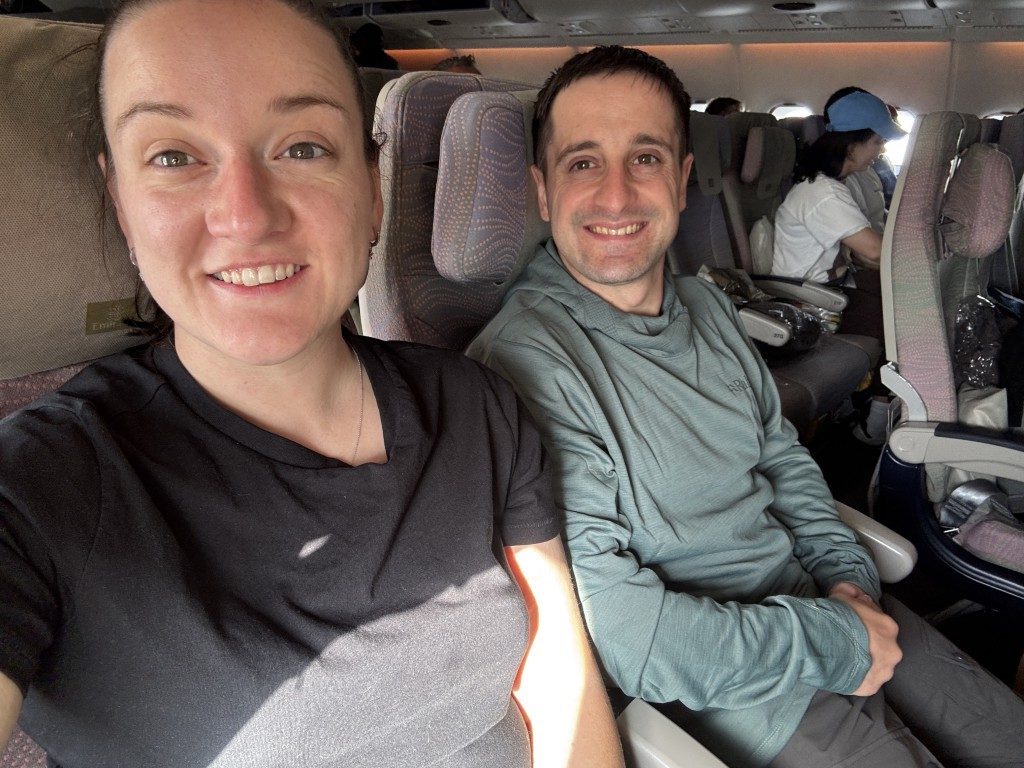
Airlines love charging for seat selection. For most people, it’s optional. When you’re managing recent surgery or mobility issues, an aisle seat with extra legroom isn’t a luxury — it’s a necessity.
Budget impact:
- Seat selection fees: £15–40 per flight per person
- Priority boarding (to avoid standing in long queues): £5–20 per flight
- Extra legroom or exit row seats: £30–80 per flight
Some airlines do offer free seat selection for disabled passengers if you contact them directly — sometimes through their special assistance line — but this isn’t consistent across carriers. Worth asking, but don’t assume it’s available. Many budget airlines charge regardless.
On a multi-flight trip (UK → Singapore → Bali → Australia → UK), these ‘extras’ added hundreds to our total costs.
Our experience: We needed aisle seats for ease of getting up, extra legroom for the hip, and priority boarding to manage fatigue and avoid long queues. None of it was optional.
Airport Assistance: When ‘Help’ Becomes Another Hidden Cost
Airport assistance should be free and straightforward. In practice, it’s often slow, unreliable, and can genuinely put you at risk of missing your flight.
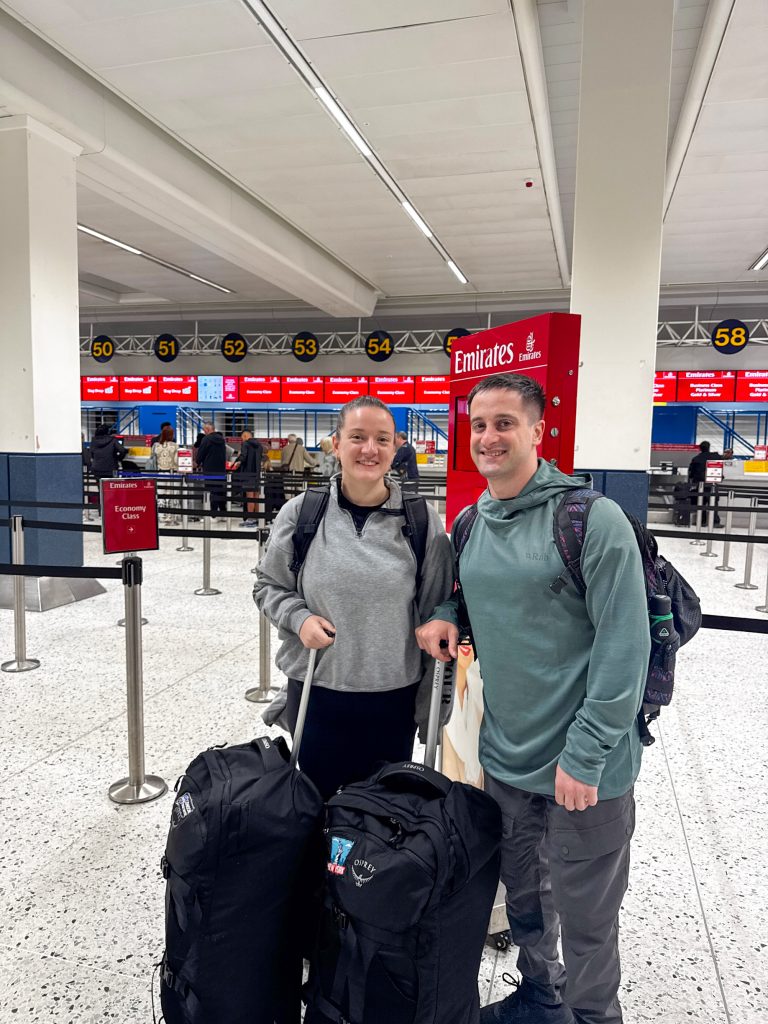
The reality: When you book assistance, you’re not getting a personal escort. You’re joining a queue of other passengers who also need help. That wheelchair assistant has to drop off other passengers at different gates, collect new passengers, and navigate airport chaos. We’ve had situations where assistance took so long we were genuinely worried about missing our flight.
Our Dubai transfer: We flew Manchester–Dubai–Singapore with a one-hour connection in Dubai. We’d booked assistance, thinking that would be enough time. It wasn’t. The assistance arrived, but we were part of a queue. By the time we got through the process and reached the gate, we were the last two passengers to board. The gate staff were closing the doors as we arrived. A one-hour connection with pre-booked assistance should have been fine. It wasn’t.
Our Singapore arrival: We landed at 08:35, exhausted from an overnight flight, with assistance booked in advance. Nobody was there. We waited — and eventually had to navigate the airport ourselves. This isn’t a one-off. It happens.
Emirates wheelchair requirement — this caught us off guard: If you need a wheelchair on the aircraft itself (not just terminal assistance), Emirates requires a MEDIF (Medical Information Form) signed by a medical professional. We had to get verbal sign-off from Nathan’s surgeon. This is separate from standard airport wheelchair assistance and only applies if you need the wheelchair onboard. Worth checking before you book.
Being questioned at security: Even with a Sunflower Lanyard and assistance marked on our boarding passes, we’ve been challenged at fast-track security — ‘Why do you think you’re allowed here?’ and ‘Do you have proof?’ It’s exhausting having to justify your access needs when you’ve already done everything right. You wear the lanyard anyway, because not wearing it means even more questions.
Costs that buy peace of mind:
To avoid these issues, you end up paying for things that shouldn’t be necessary:
- Priority/Fast Track Security: £5–15 per person per flight
- Priority Boarding: £5–20 per person per flight
- Lounge Access: £25–50 per person per visit
Why lounge access matters — it’s not about the free drinks:
Airport lounges provide guaranteed seating, quiet space to decompress, accessible toilets that aren’t overwhelmed, and somewhere to rest without the sensory overload of a packed departure hall. When you’re managing pain, fatigue, or mobility issues, that quiet space is the difference between arriving exhausted and arriving ready to enjoy your trip.
Budget impact on our multi-flight trip:
- Fast-track security: £10 per person × 6 flights = £60 (Book your flights here)
- Lounge access: £40 per person × 4 long layovers = £160
That’s over £220 per person just to make airports manageable — double it if you’re travelling with a companion.
Accessible Accommodation Means Limited Options (And Higher Prices)
When you filter accommodation by ‘accessible’ or ‘ground floor with lift access,’ your options narrow dramatically. And the remaining options are rarely cheap. (Book your accommodation here)
What we found:
- Singapore: Accessible hotels started at £60–80 per night minimum. Budget hostels were £15–20 per person.
- Bali: Accessible villas with proper bathrooms and ground-level access cost £40–60 per night, versus £15–25 for basic guesthouses. Many budget options had stairs, no grab rails, and tiny bathrooms that simply didn’t work with mobility aids.
- Australia: Accessible hotels in city centres were £100–150 per night, versus £40–60 for standard rooms.
You also can’t take advantage of last-minute deals or the ‘turn up and find something cheap’ approach, because you need to verify accessibility in advance. In Bali especially, we had to book everything ahead of time while budget travellers could rock up to any guesthouse and negotiate a cheap rate.
The accessible accommodation premium: Budget an extra 30–50% on accommodation compared to standard travel guides — and expect to lose flexibility in exchange for guaranteed access. Book your accommodation here.
The Care Assistant Cost: Double Everything
If you’re travelling with a carer, personal assistant, or partner filling that role (as we were), you’re paying for two people — but only one is on holiday.
Costs that double:
- Flights (Save on your flights here!)
- Accommodation (usually requiring two beds or a larger room)
- Attraction tickets
- Meals
- Travel insurance
Some places offer free or discounted entry for carers — the cricket in Australia, some museums — but these are exceptions. Most of the time, you’re paying full price twice.
Budget reality: If you need someone with you to travel, your costs don’t increase by 50% — they double. That £1,000 trip becomes £2,000.
Location-Specific Access Systems: You’re Starting From Zero Every Time
Different countries have completely different systems for disability access and support. What works in the UK doesn’t translate.
Examples we encountered:
Singapore:
- Universal Studios disability access card: available but required an in-person application at Guest Services with documentation (the Blue Badge worked as proof)
- MRT access: excellent but required planning around lift locations
- No equivalent to the Blue Badge for parking or general access
Bali:
- Essentially no formal disability access systems exist
- No accessible parking permits
- No concessions or discounts for disabled visitors
- Infrastructure so poor that formal access systems are almost irrelevant — you’re navigating chaos regardless
- Every location had to be assessed individually for basic accessibility
Australia (Victoria specifically):
- Disability parking permits are state-based and require residency
- Free tram travel in Melbourne CBD for people with disabilities, but requires a Victorian concession card
- Accessible facilities are excellent, but we couldn’t access concessions as non-residents
What this means: you lose all the support systems and concessions you have at home. Every new country means figuring out their system from scratch — and often being excluded from local disability benefits. In some destinations, like Bali, there is no system at all.
Public Transport Isn’t Always Accessible (Even When It Claims to Be)
Singapore has one of the best public transport systems in the world. Even there, we encountered MRT stations without lifts (older stations), buses without wheelchair access, and stations where lifts were broken or out of service.
Australia/Melbourne: Generally excellent public transport, but some older tram routes still use stepped trams that are difficult or completely inaccessible for wheelchair users and people with mobility issues. The newer low-floor trams are brilliant, but you need to check which routes have accessible trams before relying on them.
Long-distance buses in Australia (Greyhound): We managed to use overnight buses, but it was hit and miss. Some drivers helped load bags; others didn’t — it turns out it’s not in their contract, so whether you get assistance is down to individual driver discretion.
Key things to know about Greyhound Australia:
- Wheelchair lifts available on most coaches
- Manual wheelchairs, walking frames, and walkers permitted onboard
- Can accommodate up to two wheelchair users per coach
- Electric wheelchairs and mobility scooters are NOT permitted (weight and stability restrictions)
- Highly recommended to book in advance and contact their call centre
If you rely on an electric wheelchair, long-distance bus travel in Australia isn’t an option — you’d need to use more expensive alternatives.
Budget impact: Factor in taxi and rideshare costs even in cities with ‘good’ public transport. We spent £30–50 a week on taxis in Singapore despite the excellent MRT.
What ‘Budget Travel’ Actually Costs with a Disability
Budget travel guides suggest £30–50 per day is achievable in Southeast Asia. For accessible travel, here’s the reality:
Minimum daily budget — Singapore (good infrastructure):
- Accommodation: £50–80 per night (hostels aren’t an option)
- Food: £20–30 per day (hawker centres are brilliant and accessible)
- Transport: £10–20 per day (taxis when walking isn’t realistic, though the MRT helps)
- Extras: £10–15 per day (seat selection fees, equipment, unexpected access needs)
- Total: £90–145 per day
Minimum daily budget — Bali (poor infrastructure):
- Accommodation: £40–60 per night (limited accessible options)
- Food: £15–25 per day
- Transport: £15–25 per day (taxis for everything — no pavements, scooters not an option)
- Extras: £10–15 per day
- Total: £80–125 per day
Compare to standard backpacker budgets:
- Singapore: £30–50 per day (hostels, MRT, walking)
- Bali: £20–35 per day (hostels, scooter rental £3–5 per day, walking short distances)
That’s roughly double to triple the cost — and that’s before factoring in higher travel insurance, equipment costs, loss of UK benefits for trips over 13 weeks, airport extras, and care assistant costs (which double most costs).
The Bali example really highlights how poor infrastructure compounds everything. In Singapore you have options — an excellent MRT, good pavements. In Bali, you have no choice but to pay for taxis constantly.
So, Is Accessible Travel Worth the Extra Cost?
Absolutely. But it requires honest budgeting.
Don’t skip accessible travel because of the price tag. Instead, budget realistically. Assume everything will cost more, plan for the disability tax, and anything that comes in under budget feels like a win.
Our approach:
- We knew Singapore would be expensive, so we budgeted accordingly
- We prioritised accessible accommodation over budget options
- We used taxis when needed without guilt
- We accepted that our costs would be higher than standard travel guides suggested
The result: We had an incredible trip without constantly stressing about money — because we’d planned for the real costs, not the fantasy budget-guide costs.
Practical Tips for Managing the Extra Costs
Before You Go
- Notify the DWP if travelling for more than 13 weeks: Get it in writing that benefits will resume on return
- Shop around for travel insurance: Declare everything and compare specialist providers
- Research local disability systems: Does your destination have accessible parking? Concessions? Access cards?
- Research infrastructure: Does the destination have pavements and public transport, or will you be forced into constant taxi use as in Bali?
- Budget 50–100% more than standard guides suggest: Seriously — double the estimate, and triple it for destinations with poor infrastructure
- Book longer connection times if you need assistance: Don’t trust one-hour connections even with pre-booked assistance. Aim for two to three hours minimum.
While Travelling
- Book accessible accommodation in advance: Don’t rely on last-minute deals
- Use taxis without guilt: It’s a legitimate access need, not a luxury
- Ask about carer discounts: Some attractions offer free or reduced entry for companions
- Plan rest days: Fatigue costs money — more taxis, more accessible options needed
On Return
- Restart benefits immediately: Contact the DWP as soon as you’re back
- Keep all receipts: Especially for equipment, insurance, and medical costs
- Budget for the benefits gap: Payments may not resume immediately
The Hidden Benefit Nobody Mentions: The Kindness of Strangers
This post has been pretty heavy on costs and challenges, so let’s end on something that doesn’t show up in any budget spreadsheet: people are genuinely kind.
No matter where we travelled — Singapore, Bali, Australia — and regardless of language barriers, there was always someone willing to step in and help. Not out of pity or charity, but out of basic human decency that transcends borders.#

In Singapore, when lifts were out of service or we were struggling with directions, locals would stop and help without being asked. Staff at Universal Studios went above and beyond to meet our access needs. Hawker centre aunties would gesture and point to make sure we got what we needed, even with a language barrier.
In Bali, despite the infrastructure chaos, people were incredibly accommodating. Drivers helped with transfers. Restaurant staff moved furniture to create space. Local people offered assistance when they saw us navigating difficult terrain.
The language barrier never stopped anyone from helping. A smile, some hand gestures, and genuine willingness go a long way. You don’t need to speak the same language to communicate ‘can I help?’ or ‘thank you.’
This doesn’t reduce the costs we’ve talked about, but it does reduce the fear — the fear that you’ll be stranded, that you won’t be able to communicate your needs, that you’ll be a burden. In our experience, those fears were unfounded.
People everywhere, in every country we visited, were happy to help. It’s one of the best parts of travel that nobody puts in a budget guide. Remember that when you’re looking at the cost breakdown and wondering whether it’s worth it.
It absolutely is.
The Reality Check
Travel with a disability costs more. There’s no getting around it. The systems aren’t designed for us, the budget options aren’t accessible, and we pay the price for living in a world that treats accessibility as optional.
But here’s what I learned: the extra cost is worth it. Singapore’s efficiency, Bali’s chaos, Australia’s openness — every destination was incredible in its own way. Some (like Singapore) made accessible travel relatively straightforward. Others (like Bali) made it expensive and exhausting. We just had to be honest about what it would actually cost in each place.
Budget guides won’t tell you this. Travel influencers won’t mention it. But other disabled travellers will — and I’m telling you now: add 30–50% to any budget estimate you see, double it for destinations with poor infrastructure, plan for the disability tax, and book that trip anyway.
The world is worth seeing, even if it costs more to see it.
Planning accessible travel? Our Singapore guides show how we managed accessible travel in one of Asia’s most accessible cities — where to stay, the best things to do, whether Singapore is expensive, and the best time to visit.
Have you experienced hidden costs while travelling with a disability? What surprised you most? We’d love to hear your experiences in the comments.
Based on our travels since August 2025 through Singapore, Bali, and Australia. Costs and experiences are from a UK perspective and may differ in other regions.
Follow our accessible travel adventures here.